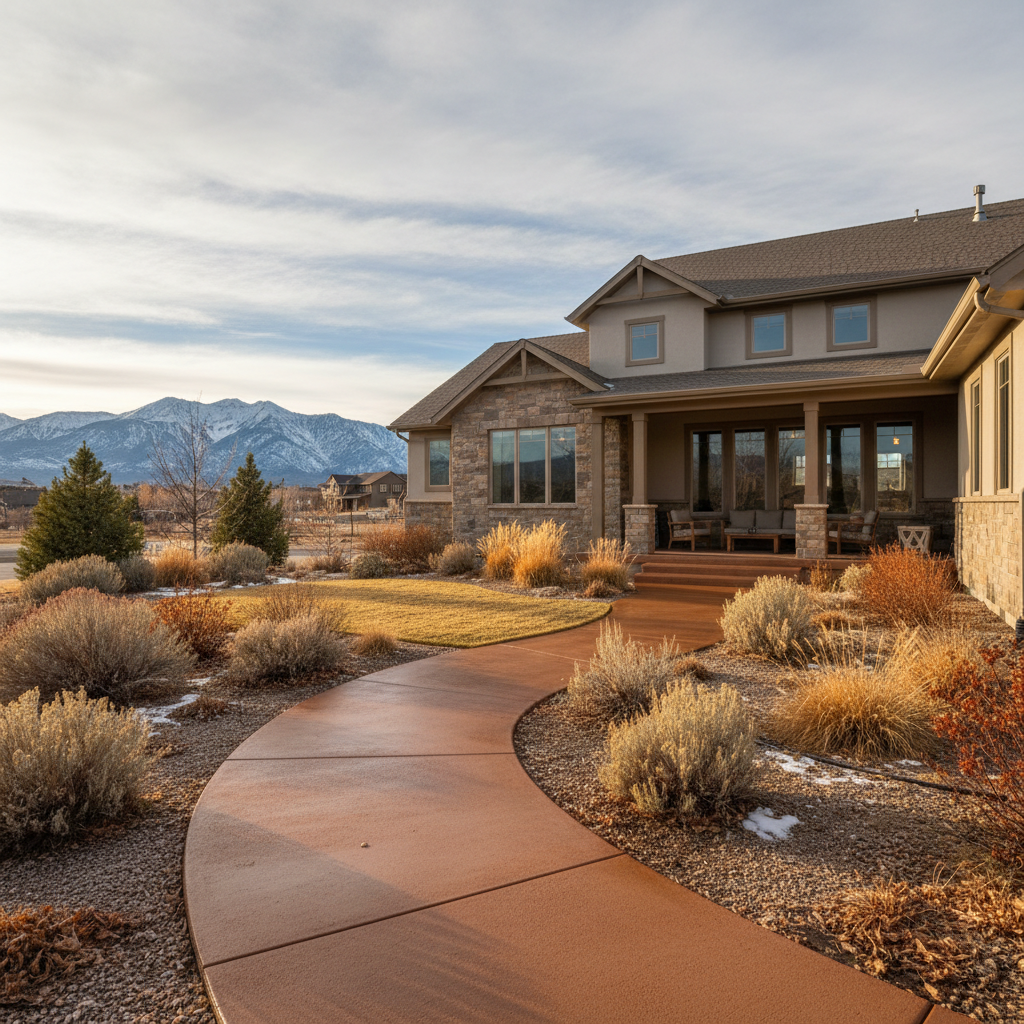
So, you're thinking about staining your concrete, huh? That's actually a really smart move. Staining can totally change a plain old slab into something truly beautiful, boosting your home's curb appeal and value. But here in Salt Lake City, it's not just about picking a color; you also have to think about the best time to do the work and how to keep it looking good afterward. Our local climate, with its really hot summers and cold, snowy winters, makes timing and ongoing care super important.
When's the Best Time to Stain Concrete in Salt Lake City?
This is probably the question I get asked most often. You really can't just stain concrete whenever you feel like it and expect perfect results. The weather plays a huge role in how the stain soaks in and cures. Generally, I tell folks to aim for spring or fall. Why those times?
- Spring (April to early June): This is prime time, no doubt. The ground temperatures are starting to climb, but we haven't hit those scorching summer highs yet. You usually get consistent mild days, often in the 50s to 70s Fahrenheit, which is absolutely ideal for the stain to absorb evenly and cure properly. Plus, you avoid that intense sun that can dry the stain too fast, which often leads to an uneven finish.
- Fall (September to October): Another excellent window. The summer heat has finally broken, and temperatures are cooling down nicely. Again, you're looking for those consistent mild days, typically in the 50s and 60s. The air is often a bit drier then too, which is a bonus. You just need to keep an eye out for early frosts or sudden cold snaps; those can really mess with the curing process.
What you absolutely want to avoid is the dead of summer or the middle of winter. Trust me on this one.
- Summer (July-August): Our Salt Lake summers get hot, I mean *really* hot. We're talking 90s and even 100s. That kind of heat makes the concrete surface dry out way too fast. The stain won't have enough time to react and penetrate deeply, which just leads to a splotchy, weak color that won't last. Beyond that, working in that heat is brutal for my crew, and it's just not worth risking a subpar job.
- Winter (November-March): Forget about it entirely. Staining concrete in freezing temperatures or when there's even a chance of frost is a recipe for disaster. The stain won't cure, it won't stick, and you'll just end up with a big mess. Plus, you can't properly clean and prep the surface when it's cold and wet anyway.
Weather Conditions That Affect Staining
Beyond just the season, you really need to pay attention to the daily forecast. Here's what I always look for:
- Temperature: We aim for daytime temperatures between 50°F and 80°F. Nighttime temperatures shouldn't dip below 40°F for at least 24 to 48 hours after we apply the stain.
- Humidity: Low to moderate humidity works best. High humidity can really slow down drying times, and that can cause issues.
- Wind: A little breeze is fine, but strong winds can cause the stain to dry unevenly or, even worse, blow dust and debris onto the wet surface. We'll often put up windbreaks if we need to.
- Rain: This is a big one. You need at least 24 to 48 hours of clear, dry weather *after* the stain goes on. Rain too soon will either wash it away or leave unsightly marks. We're always checking the forecast multiple times before we start a job, especially with those unpredictable afternoon thunderstorms we sometimes get rolling in from the Oquirrh Mountains.
- Direct Sunlight: While you do need some warmth, direct, intense sunlight can be a problem, especially for acid stains. It can cause the stain to dry too quickly, leading to uneven coloration. Sometimes we'll work in sections or use temporary shading to manage this.
Protecting Your Stained Concrete Investment Year-Round
So, you've got your beautifully stained concrete. Now what? You want it to last, right? Here's how to protect it, especially with our unique Salt Lake weather patterns:
- Seal It: This isn't optional, it's absolutely necessary. After the stain has fully cured (usually 2-3 days), we apply a high-quality sealer. This protects the color from UV rays, abrasion, and moisture. Think of it like sunscreen and a shield for your concrete.
- Re-seal Periodically: Depending on how much traffic it gets and how much sun it sees, you'll need to re-seal every 2-5 years. Areas like driveways, which get a lot of car traffic and de-icing salts, will need it more often than, say, a covered patio. You'll know it's time when water stops beading up on the surface.
- Clean Regularly: Sweep or blow off debris often. For a deeper clean, use a mild detergent and a soft brush or a pressure washer on a low setting. Just avoid harsh chemicals or abrasive cleaners that can strip the sealer or damage the stain.
- Watch Out for De-icing Salts: This is a really big deal for us here in Salt Lake. Calcium chloride and other de-icing salts used on sidewalks and driveways can be incredibly tough on concrete and its sealer. Try to use them sparingly on your stained surfaces. If you do use them, rinse the area thoroughly once the snow and ice are gone. Sand, by the way, is a much friendlier alternative for traction.
- Address Spills Quickly: Oil, grease, paint, or anything acidic should be cleaned up immediately. The sealer does offer protection, but it's not invincible, especially against things that can etch or stain.
Taking care of your stained concrete isn't rocket science, but it does require a little attention, especially with our unique climate here in Utah. Do it right, and your stained concrete will look fantastic for years. If you're ready to talk about getting your concrete stained, give Concrete Driveway Pros Salt Lake City a call. We're happy to walk you through the process and answer any questions you've got.